The Essential Guide to a Bush Camp in Kenya: 2026 Edition
You might think that booking a bush camp Kenya experience means sacrificing every modern comfort for a night on the hard ground. In reality, the most authentic way to experience the wild is often the most sophisticated. It’s natural to feel a flutter of nerves when you imagine sleeping with only a layer of canvas between you and the African night. You want to hear the distant roar of a lion, yet you still crave a hot shower and a soft bed once the sun sets.
This guide will show you that a modern tented stay is a masterclass in understated elegance where safety and luxury meet the untamed. You’ll learn how to choose a camp that offers the perfect balance of raw magic and refined amenities for your 2026 adventure. We’ll explore the different tiers of accommodation, address your concerns about wildlife proximity, and pinpoint which regions offer the best value under the latest 2026 conservation fee structures. By the end, you’ll feel confident that the right camp doesn’t just put you in nature; it connects you to it with grace and expertise.
Key Takeaways
- Understand how a bush camp Kenya experience uses a “canvas barrier” to immerse you in nature’s rhythm while providing the luxury of a premium hotel.
- Discover the structural differences between authentic and luxury tents, ensuring your 2026 accommodation matches your personal comfort standards.
- Learn about the vital role of Maasai guards and camp protocols that guarantee your safety while sleeping in the heart of the wild.
- Identify the specific advantages of private conservancies, such as night drives and off-road viewing, compared to traditional national reserves.
- Master the logistics of bush flights and local bookings to ensure your journey to remote airstrips is as seamless as the safari itself.
What is a Bush Camp in Kenya? Defining the Unfiltered Safari
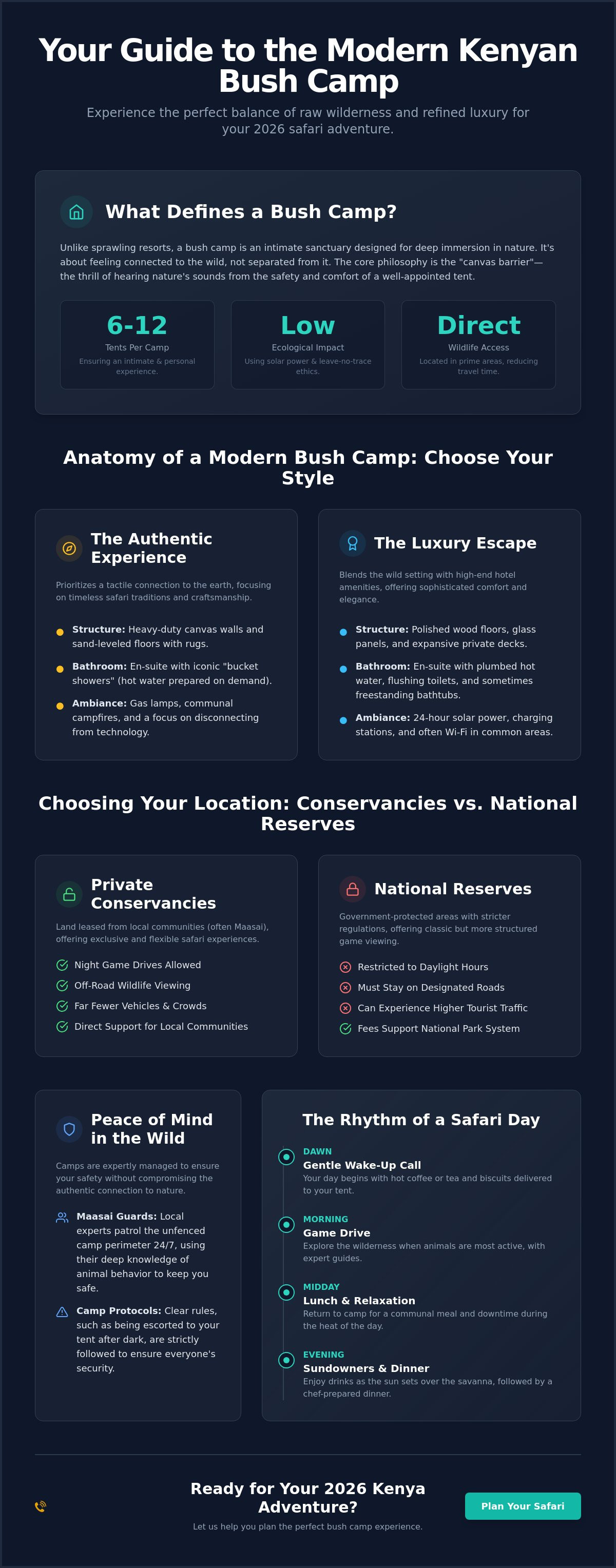
A bush camp in Kenya is a deliberate return to the roots of exploration. Unlike the sprawling, stone-built resorts found in many tourist hubs, these camps are intimate, small-scale sanctuaries designed to put you directly in the path of the wild. They typically consist of a handful of canvas tents tucked under acacia trees or along riverbanks, ensuring that the landscape remains the star of the show. By choosing a bush camp Kenya experience, you’re opting for a stay where the walls are breathable and the boundaries between you and the savannah are beautifully thin.
This approach is built on the “canvas barrier” philosophy. It’s the thrill of hearing the rhythmic sawing of a leopard or the low rumble of an elephant while you’re tucked safely into a high-quality bed with crisp linens. It’s about Defining the Unfiltered Safari as a sensory journey rather than just a sightseeing trip. While large lodges offer a sense of separation from the environment, bush camps prioritize an organic connection to the land. These structures are often temporary or semi-permanent, reflecting a deep respect for the ecosystem and a commitment to low-impact hospitality.
The Evolution of the Tented Camp
The concept has traveled a long way from the rugged, basic expeditions of the early 20th century. Today, the modern bush camp is a marvel of sustainable engineering. By 2026, the industry has fully embraced silent solar power and sophisticated eco-waste systems that allow these camps to vanish without a trace at the end of the season. This “leave-no-trace” ethos ensures that the pristine wilderness stays exactly that, allowing travelers to enjoy luxury without a heavy ecological footprint. It’s a sophisticated blend of heritage and high-tech conservation.
Why Choose the Bush Over a Lodge?
The primary draw is the profound sense of intimacy. Most camps host only 6 to 12 tents, meaning you’ll never encounter the crowds found in larger establishments. This small footprint allows for a highly personalized Kenya classic safari where the guides know your name and your specific interests. You’ll wake to the smell of wild sage and damp earth, spending your evenings around a communal campfire sharing stories under a canopy of stars. It’s the ultimate way to enjoy a bush camp Kenya stay because you aren’t just a face in a crowd. Because these camps are often located deep within conservancies or remote park sectors, your drive times to find wildlife are significantly reduced. You are already exactly where the action is.
Luxury vs. Authentic: Anatomy of a Modern Bush Camp
Choosing a bush camp Kenya experience often comes down to where you sit on the spectrum of luxury versus authenticity. A high-end luxury camp might feature polished mahogany floors, freestanding copper bathtubs, and expansive glass panels that replace traditional canvas walls. In contrast, an authentic camp prioritizes a tactile connection to the earth, using heavy-duty canvas, Persian rugs over sand-leveled floors, and a focus on craftsmanship that feels timeless. Both styles offer a profound sense of place, yet they cater to different versions of the safari dream. These spaces are often part of a Kenya classic safari, where the goal is to balance elegance with the raw power of the landscape.
Life in the bush follows the sun. Your day begins with a gentle “Hodi?” from your tent attendant at dawn, accompanied by a steaming pot of coffee and homemade biscuits. After a morning game drive, you’ll return for a communal lunch where guests share sightings of the morning. The rhythm concludes with the iconic sundowner, a chilled drink in hand as the sky turns violet, followed by a three-course dinner under the stars. This communal dining experience is a hallmark of camp life, fostering connections with fellow travelers and local guides who share their deep knowledge of the land.
The “Glamping” Spectrum: Amenities to Expect
In 2026, even the most remote outposts offer sophisticated amenities. You’ll find en-suite bathrooms in almost every camp, though the method varies. Authentic camps often utilize “bucket showers,” where staff fill a canvas bag with water heated over a fire to your preferred temperature. It’s a surprisingly effective and nostalgic ritual. Luxury camps typically provide plumbed hot water and 24-hour solar power. While charging stations for cameras are standard, many camps intentionally limit Wi-Fi to the main lounge to preserve the quietude of the wild. If you’re looking for a journey tailored to your specific needs, exploring our options for tailor-made safaris can help you find the perfect amenity balance.
Seasonal and Mobile Camps: Following the Migration
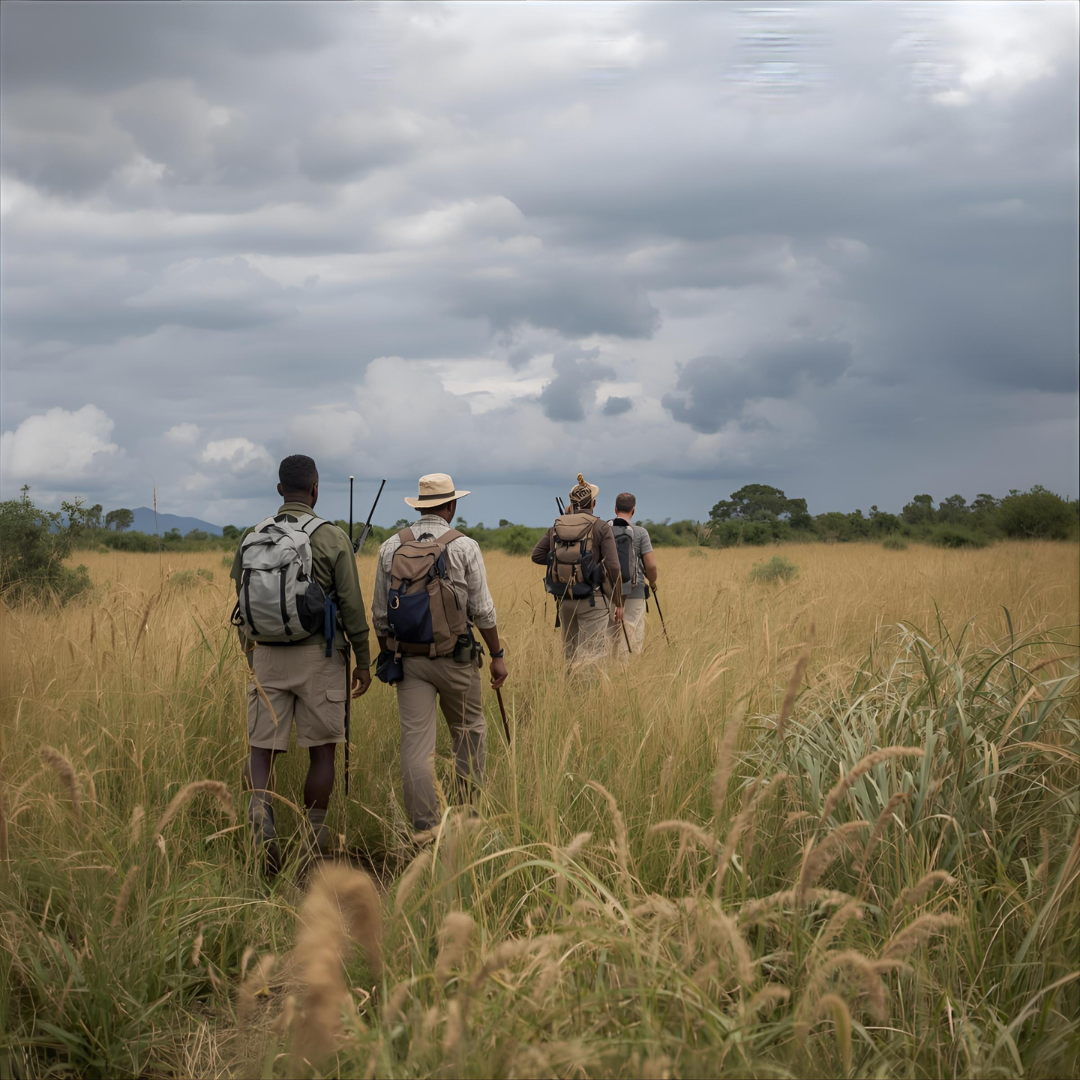
For those who want to be at the heart of the action, seasonal mobile camps are the gold standard. These structures are designed to be dismantled and moved two or three times a year, allowing them to follow the wildebeest migration Kenya as it flows across the Mara ecosystem. If you’re seeking a true Kenya wilderness safari, you might even consider a “fly-camp.” This involves a temporary setup in a remote location for a single night, often reached by foot, offering the most unfiltered connection to the landscape imaginable. These seasonal camps offer a “raw” connection because they exist only when the wildlife is most active in that specific area, ensuring you are always where the heartbeat of the savannah is strongest.
Safety and Comfort: Addressing the #1 Objection
It’s the question every first-time visitor asks: what stops a lion from walking into my tent? While the thought is enough to prickle the skin, the reality is rooted in decades of behavioral science and local wisdom. Safety isn’t just a protocol in these environments; it’s the very foundation of the experience. Every bush camp Kenya operates with a multi-layered security approach that allows you to enjoy the thrill of the wild without ever being in genuine danger. From the moment you arrive, you’ll be briefed on the “rules of the bush,” which are simple, effective, and strictly enforced by the camp staff. Safety is paramount.
Comfort also extends to the smaller details that often cause anxiety, such as insects and temperature. Modern camps use high-tension mosquito netting that creates a complete seal, allowing the night breeze to flow through while keeping the “creatures” out. During the cooler months, you’ll often find a “bush baby” (a hot water bottle) tucked under your duvet at night, while battery-powered fans or natural cross-ventilation keep the air moving during the heat of the day. These camps are masters at managing the elements to ensure you feel pampered, not exposed.
The Psychology of the Tent
Animals perceive the world differently than we do. To a predator, a zipped canvas tent is a solid, impenetrable object rather than a fragile barrier. They don’t understand the concept of a “door” or a “zipper,” and because they cannot see what is inside, they have no reason to investigate. They don’t. Modern safari tents are constructed from heavy-duty, industrial-grade canvas that doesn’t flap or tear easily, reinforcing this visual boundary. The Maasai Askari are the silent guardians of the Kenyan night, ensuring every guest moves safely between the campfire and their tent after the sun has set. Their presence is a reassuring bridge between your comfort and the untamed world outside.
Health and Hygiene in the Wild
There is a common myth that choosing a bush camp Kenya stay means compromising on cleanliness. In reality, the standards of hygiene in a high-end camp often rival those of city hotels. Bush kitchens are models of efficiency, where chefs prepare gourmet meals using fresh, locally sourced ingredients handled with meticulous care. Water is either bottled or treated through advanced filtration systems, and hand-sanitizing stations are a standard fixture. For peace of mind, every reputable camp is linked to emergency services like the Flying Doctor evacuation program, ensuring that medical assistance is only a short flight away. You can rest easy knowing that while you are deep in a Kenya wilderness safari, your health and comfort are never left to chance.
Choosing Your Location: Conservancies vs. National Reserves
Location is the single most important factor when planning your bush camp Kenya adventure. The landscape is generally divided into two categories: National Reserves, which are state-managed and open to the public, and Private Conservancies, which are community-owned lands bordering the parks. A well-designed Kenya classic safari often balances both, offering the iconic grandeur of the reserves alongside the quiet exclusivity of the conservancies. Each provides a distinct window into the wild, and understanding the legal and practical differences is key to managing your expectations for 2026. With the 2026 fee restructure now in full effect, choosing the right side of the fence also impacts your daily conservation contributions and the level of privacy you’ll enjoy.
National Reserves like the Maasai Mara remain the crown jewels of Kenyan tourism. They offer the sweeping vistas and massive herds that have made East Africa famous. However, they can become crowded during peak seasons. This is where a bush camp Kenya stay within a conservancy offers a strategic advantage. By splitting your time between the two, you get the “big picture” of the reserve and the “fine detail” of the private lands. It’s the most comprehensive way to see the country.
The Conservancy Advantage
Private conservancies operate on a community-led model where Maasai landowners receive direct financial benefits from the presence of the camps. This partnership ensures that conservation is a sustainable livelihood for the local people. For the traveler, the primary benefit is exclusivity. Most conservancies enforce a strict limit of just three vehicles per wildlife sighting, ensuring your experience remains intimate and undisturbed. Unlike National Parks, conservancies allow for activities that bring you closer to the earth, such as night game drives and guided bush walks. These walks are a revelation. You’ll learn to track animals by their footprints and understand the medicinal uses of local plants, all while accompanied by an expert guide who grew up on this very land.
Strategic Positioning for the Great Migration
If your heart is set on the Great Migration, your choice of camp location becomes even more critical. From July to October, the drama unfolds across the Mara, but the best camps are those positioned near key river crossing points. Beyond these peak months, secret spots in the northern conservancies offer incredible resident wildlife viewing without the seasonal crowds. In the bush, location is the difference between watching the migration on a screen and feeling the thunder of hooves through your feet. Whether you seek the famous plains of the Mara or the rugged hills of a private sanctuary, our Kenya Wilderness Safari packages are designed to place you exactly where the 2026 wildlife density is highest. View our recommended safari circuits to find your perfect match.
Planning Your 2026 Kenya Bush Camp Experience
Landing on a remote dirt airstrip is the true beginning of your adventure. These bush flights are the lifeline of the safari circuit, connecting Nairobi to the most secluded corners of the Mara and beyond. Because space in the small aircraft pods is limited, you’ll need to swap your hard-shell suitcases for soft-sided duffel bags. This small adjustment ensures your bush camp Kenya journey starts without a hitch as you glide over the Great Rift Valley toward your destination. It’s a seamless transition from the modern world to the heart of the wild.
Integrating a rugged tented experience into a broader luxury safari Kenya itinerary allows you to enjoy the best of both worlds. You might spend three nights in a high-design lodge with a spa, followed by four nights under canvas to truly reconnect with the land. This contrast deepens your appreciation for the landscape and ensures your journey feels like a complete story rather than a single chapter.
The Local Expertise Factor
Choosing the right camp is easier when you have an insider’s perspective. Jungledwellers.com acts as your local mentor, vetting every property for guide quality and sustainability standards. Whether you’re planning a honeymoon or a family adventure, our tailor-made safaris ensure your itinerary reflects your personal style. We maintain direct relationships with camp managers to guarantee that the “hidden gems” we recommend meet the high expectations of a 2026 traveler. This human connection is what turns a good trip into an extraordinary one.
Booking Timeline and Next Steps
For the 2026 season, the most sought-after camps are already seeing high demand. We suggest a booking window of 12 to 18 months for peak migration dates to ensure you get your first choice of location. It’s also vital to remember that the Kenya Wildlife Service requires all park fees to be paid through their online portal, a process that became mandatory in late 2025. Once your health and visa requirements are in order, the only thing left is to step into the wild. Contact Jungledwellers.com to start crafting your authentic bush camp itinerary and secure your place in the heart of the savannah.
Embrace the Rhythm of the Wild
A stay at a bush camp Kenya is more than a vacation; it’s a profound shift in perspective. You’ve seen how the modern tented experience balances raw adventure with sophisticated safety, allowing you to sleep soundly while the savannah breathes just outside your door. From the exclusivity of private conservancies to the iconic crossings of the Mara, the right choice of location ensures your 2026 journey is both ethical and exhilarating. It’s about finding that rare space where the wild feels like home.
Jungledwellers.com stands as your trusted partner in this untamed landscape. As a locally owned and operated inbound DMC, we pride ourselves on being specialists in tailor-made, low-impact safari experiences that leave the ecosystem untouched. Our expert guides bring decades of local knowledge to every sighting, acting as mentors who connect you to the land. We invite you to explore our Kenya Wilderness Safari packages for 2026 and begin the process of crafting a journey that resonates deep within your soul. The wild is waiting, and we’re ready to show you its most authentic heart.
Frequently Asked Questions
Is a bush camp in Kenya safe for children?
Yes, many camps are safe and welcoming for children, though some have a minimum age limit of six or eight years to ensure everyone’s comfort. Staff and Maasai Askari keep a constant watch on the camp perimeter, and family-style tents are often available. It’s a transformative way for kids to learn about nature, provided they follow the safety briefings and stay within designated areas after dark.
Do bush camps have Wi-Fi and electricity?
Most modern camps provide 24-hour electricity via silent solar arrays, while Wi-Fi is typically restricted to the main lounge area. This setup allows you to keep your devices running without losing the sense of “unplugging” from the world. While connectivity is reliable in 2026, it’s best to expect slower speeds than in the city, which is perfect for a quick update but less ideal for streaming.
What is the difference between a tented camp and a safari lodge?
The primary difference lies in the materials and the scale of the experience. A lodge is a permanent masonry structure with solid walls and often a higher guest capacity, whereas a bush camp Kenya stay involves high-quality canvas tents and a much smaller guest count. Camps offer a closer connection to the sounds of the wilderness, while lodges provide a more traditional hotel feel.
Will I be able to charge my camera batteries in a bush camp?
You will definitely be able to charge your camera gear, either via outlets in your tent or at a central charging station in the mess tent. Most camps use British-style (Type G) plugs, and the solar systems are robust enough to handle phones, tablets, and camera batteries. It’s always a good idea to bring a spare battery so you never miss a shot during a long game drive.
What should I pack for a stay at a Kenyan bush camp?
Pack light, neutral-colored clothing in a soft-sided bag to accommodate the strict weight limits on bush flights. Layers are essential because temperatures can swing from chilly mornings to hot afternoons. Don’t forget a wide-brimmed hat, high-SPF sunscreen, and a good pair of binoculars. Since most camps offer daily laundry services, you can easily manage a week-long safari with just a few changes of clothes.
Are there bathrooms inside the tents at a bush camp?
Yes, almost all reputable camps now feature private, en-suite bathrooms located directly inside or attached to your tent. These include flushing toilets and showers, which may be plumbed with solar-heated water or the traditional bucket style filled by staff. You won’t need to leave your tent in the middle of the night to find facilities, ensuring both comfort and peace of mind.
Can I see the Big Five from a bush camp?
You can absolutely see the Big Five from a bush camp Kenya, especially those located in the Maasai Mara or surrounding conservancies. Because these camps are situated deep within wildlife-rich areas, you’re often just minutes away from lion prides, elephant herds, and elusive leopards. Your guides are experts at tracking these animals, and sightings frequently happen right on the camp’s doorstep or during your daily drives.
What happens if I need a doctor while at a remote bush camp?
Every camp is equipped with a comprehensive first aid kit and staff trained in basic medical response. For more serious situations, camps are linked to the Flying Doctor service, which provides emergency aerial evacuation to world-class hospitals in Nairobi. This coverage is a standard part of the safari experience, ensuring that even in the most remote corners of the savannah, professional medical help is never out of reach.